In life, there are various situations in which one may not be able to fulfill professional duties due to illness. In Germany, if this happens for an extended period due to illness, sickness benefits are paid. In this article, we focus on sickness benefits in the tax declaration. We will ask whether taxes need to be paid on them and what impact it has on the final settlement. We invite you to read on.
Who is entitled to sickness benefits in Germany?
The right to sickness benefits is granted to all employees as well as individuals receiving unemployment benefits (ALG I) in Germany who are legally insured and are ill over an extended period. It serves to compensate for the loss of income in the event of inability to work due to illness or a serious accident.
Individuals who are unable to fulfill professional duties due to illness and receive a corresponding medical certificate receive full salary for the first 6 weeks, which is still paid by the employer. In Germany, this is referred to as “continued payment of wages in the event of illness” and is regulated by the law on continued payment of wages.
If the illness or injury is more severe and one is unable to return to work after this time, sickness benefits begin. No additional application is required for this. One must just remember to send the medical certificate directly to the health insurance company – then the insurance company will contact you. Recently, the application is transmitted electronically.
A simple tax return in 12 minutes?
Choose Taxando!
How much is the sickness benefit in Germany?
The amount of sickness benefit is generally 70% of the gross basic salary and no more than 90% of the net salary – but only up to the contribution assessment ceiling. It should be noted that one-off allowances received from the employer in the past 12 months, such as Christmas bonuses, are added to the net salary. For the year 2025, the sickness benefit is limited to the statutory maximum of 128.63 euros per day.
For unemployed individuals receiving ALG I, the amount of sickness benefit is determined by the amount of unemployment benefit last received.
Is sickness benefit tax-free like other benefits? More on this in the next part of the article.
How long can one receive sickness benefits?
However, sickness benefits cannot be received indefinitely – they are paid for a maximum of 78 weeks within three years for one illness (including 6 weeks of salary payment by the employer). After this period, if health problems that prevent working persist, the only option left is to apply for a pension.
We have now learned the basic information about the benefit in case of inability to fulfill professional duties. Now we come to the formalities with the tax office and answer the previously posed question – must sickness benefits be taxed?
Do you have to pay taxes on sickness benefits?
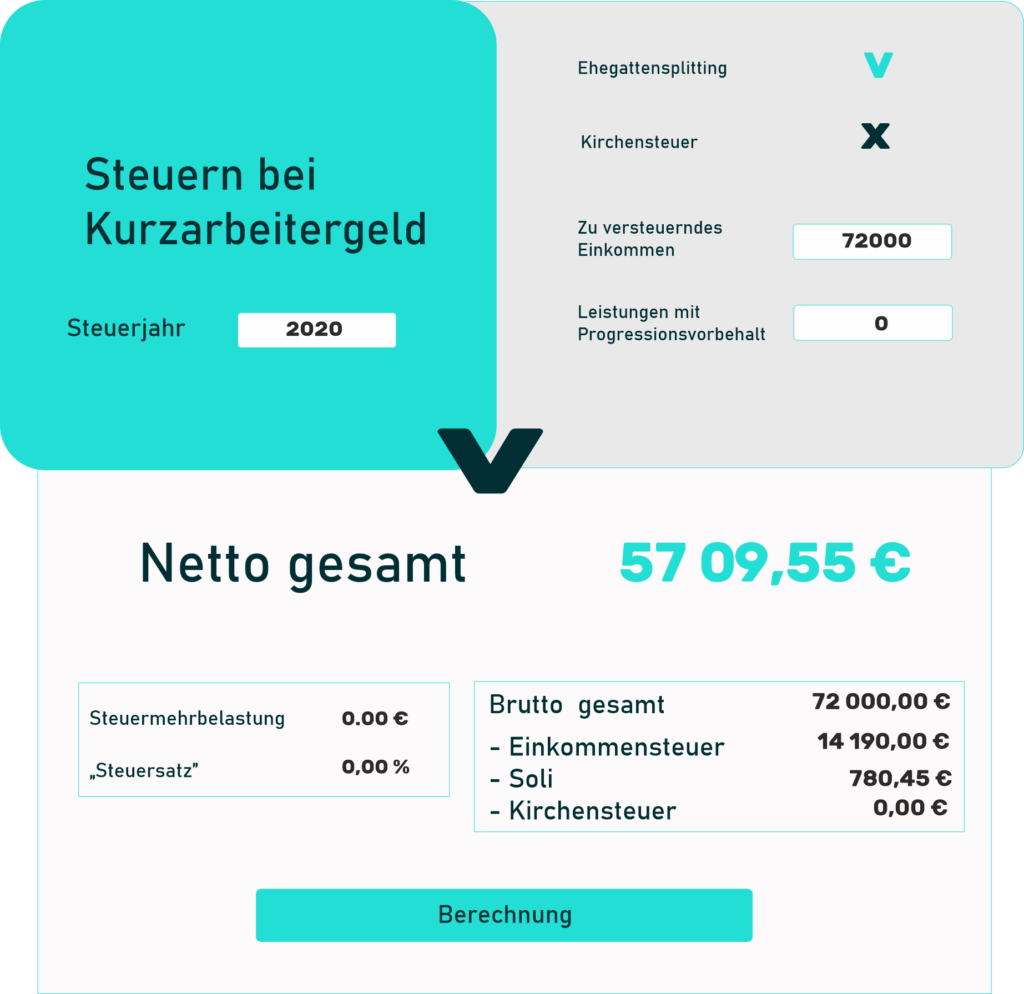
Sickness benefits in Germany are tax-free but are subject to progression – progression clause. This means that it can increase the tax burden that one has to pay on the regular salary if one has also received such in the same year.
One should also remember that contributions to the pension insurance, unemployment insurance, and long-term care insurance are still deducted from the health benefits. However, this is done automatically before the money is transferred to the account.
Sickness benefits and taxes – what does settlement with progression mean?
So, sickness benefits are not taxable themselves but can lead to a higher tax burden due to the progression clause. To illustrate this, here is an example – one receives a salary for 6 months and then has an accident and goes on sickness benefits. Although no taxes are deducted from the sickness benefits, it increases the tax rate one has to pay on the income earned while still working. In this way, the tax burden will be significantly higher than with a settlement only for the working time.
Sickness benefits in the tax return – must they be taken into account?
The German tax system assumes that if one receives untaxed income higher than 410 euros in the relevant tax year, it must be included in the declaration submitted to the tax office.
Although sickness benefits are tax-free, as we previously wrote, they can still affect the tax burden. Therefore, they should be listed in the annual settlement under “substitute benefits” as replacement income.
If you have received sickness benefits and need to submit a declaration, the health insurance company should automatically send all the necessary documents for the settlement.
Sickness benefit in the tax return – easily considered with the Taxando app
Do you need to file a tax return with the German tax office and are considering how to include the sickness benefit subject to progression in the tax return? Use our Taxando app for tax calculation, with which you can quickly and conveniently complete all formalities. Our tool will definitely help you consider the sickness benefit in the tax return and determine the due refund. Download our program today – we invite you!

Maciej Szewczyk
He gained experience as a consultant on IT projects for many international companies. In 2017, he founded the startup taxando GmbH, where he developed the innovative tax app Taxando, which simplifies the filing of annual tax returns.
Maciej Szewczyk combines technological expertise with in-depth knowledge of tax regulations, making him an expert in his field. In his private life, he is a happy husband and father and lives with his family in Berlin.